

Our Training Areas at a glance: Why space, a calm atmosphere and versatile practice zones are the strength of effective Golf Practice
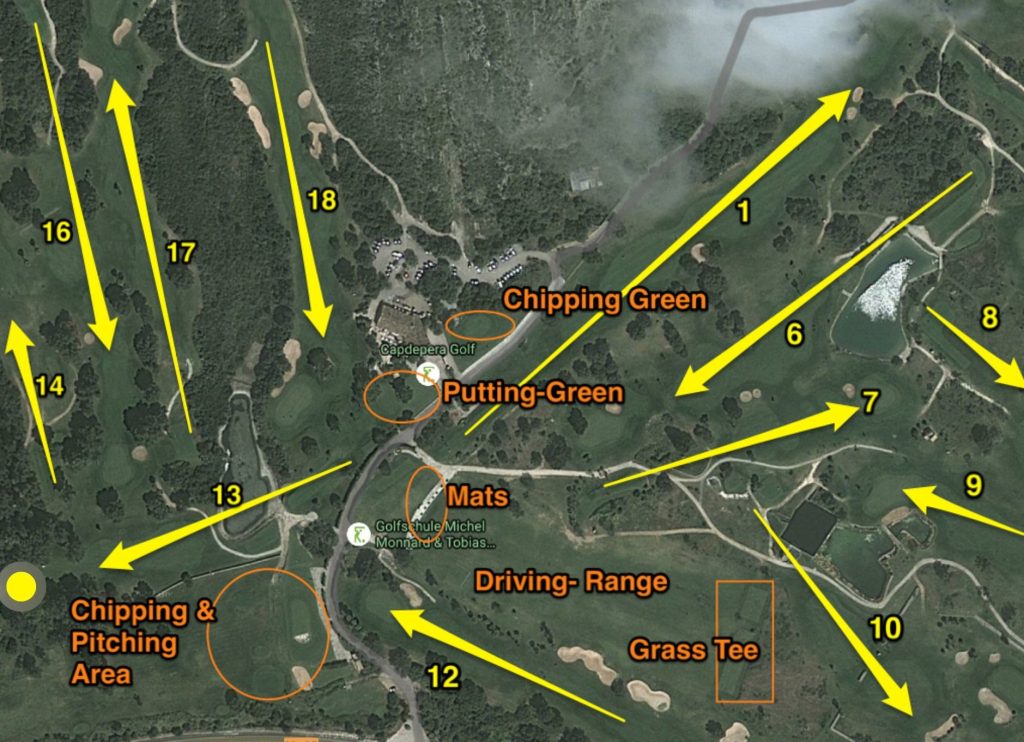
To give you a clear overview of our practice facilities, we’ve created two dedicated pages:
- Driving Range – Long Game Training (this page)
- Short Game Area – Green Bunker play – Fairway bunker – Approach Wedges & Putting → Go to this link
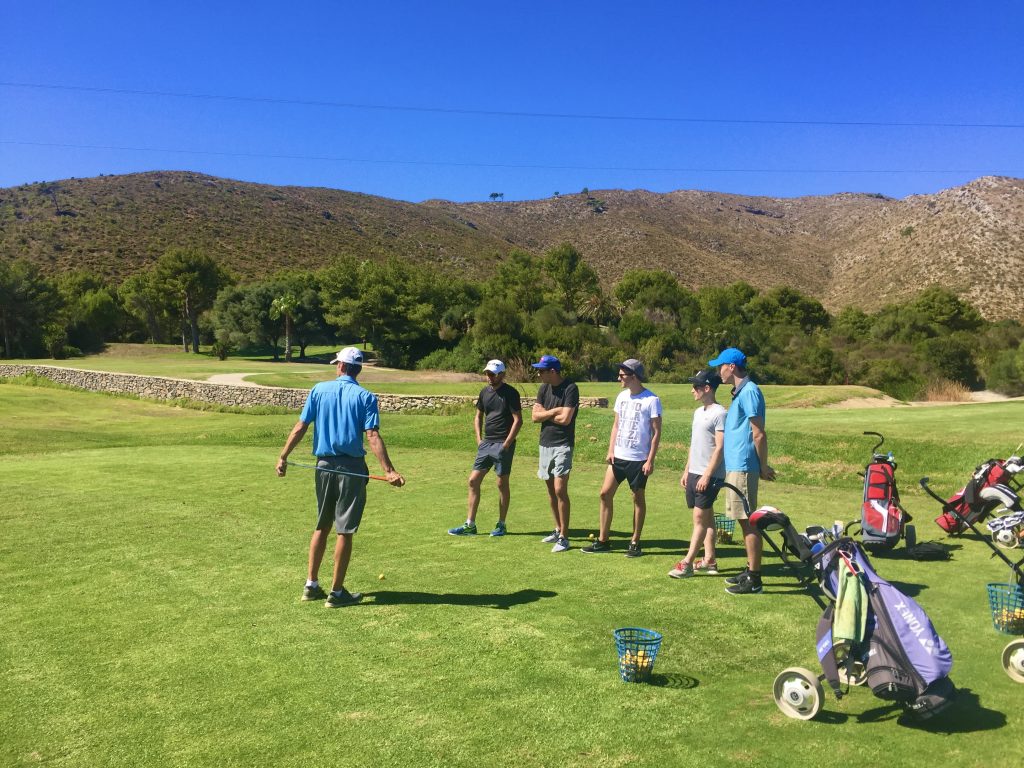
Both areas are essential for improving your golf. The Driving Range helps you build technique, ball flight and long-game consistency. The Short Game Area focuses on the shots that truly influence your score: distance control, wedges, chipping, bunker shots and putting. Together, they form a complete and realistic training environment for players of all levels.
Why Golf Training with us is especially effective
1. Driving-Range Mats

Our Driving Range offers both mat and grass tees. Mats provide consistent quality and are ideal for beginners working on swing motion and contact. They allow players to focus on movement before the low point becomes relevant.
We use the mats very little, but when they help us didactically, we make use of them.
2. Grass Tees on the Range

At the grass tee, we work intensively on clean ball-turf contact – one of the most important fundamentals in golf. Mats are more forgiving but offer less feedback. That’s why we added a two-metre semirough strip in front of the grass tee. It’s perfect for first real ball contacts and precise technical training for more advanced players. We use all kinds of games to help you build more consistent contact.
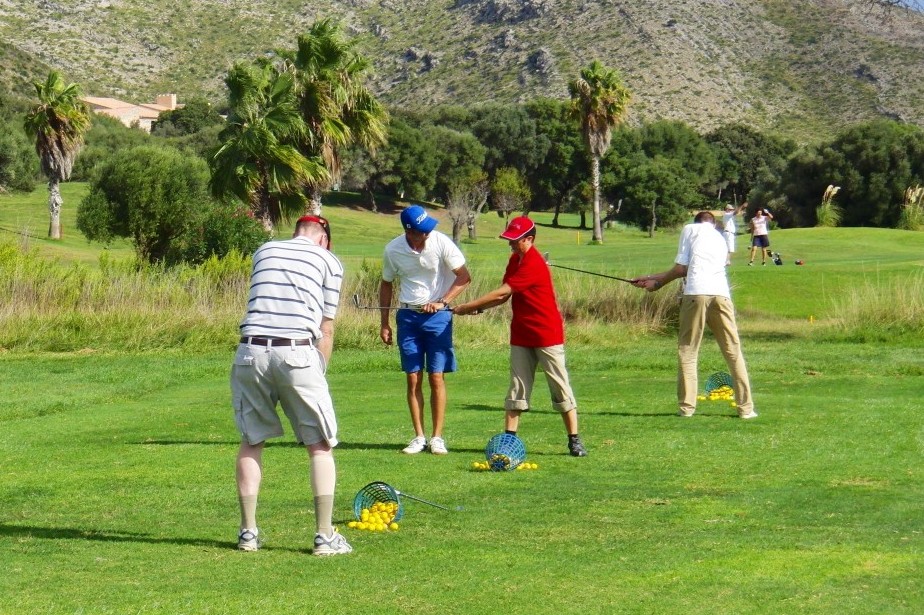
Some areas of the Practice Tee are intentionally varied: small slopes in all directions simulate every possible lie – uphill, downhill, ball above or below the feet. This creates a training environment that feels very close to real on-course play.
Real Reviews: Why Golfers Appreciate Training With Us
[booking-button]
3. Pitching Distance Control
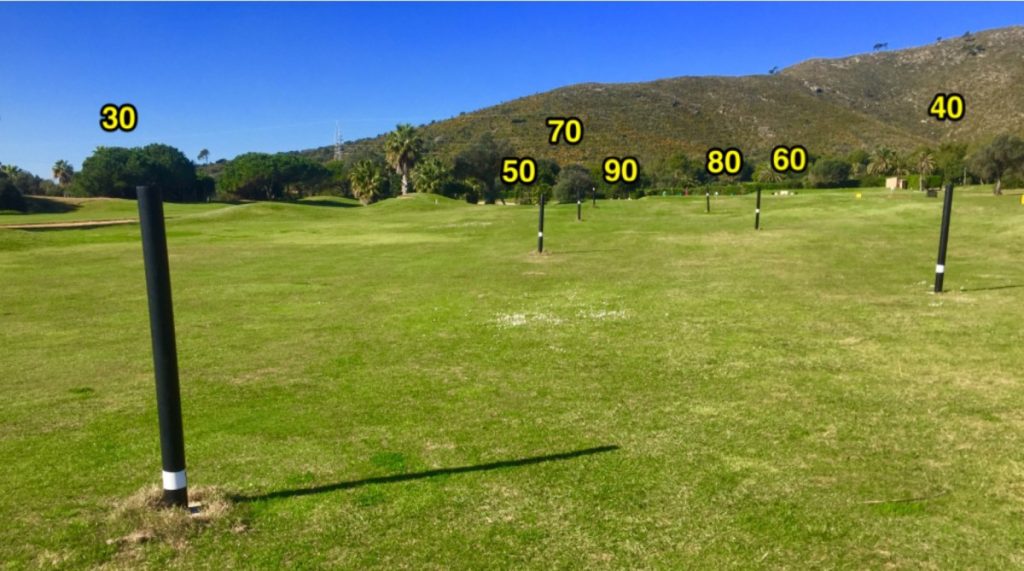
On one side of the Driving Range, we have a Pitching Practice Station. Here we work on impact quality, distance control and trajectory – the three key factors for a better Wedge Game. Targets are placed every ten metres, from 30 to 90 metres. Players of all levels can work with clear reference points and quickly develop a feel for different distances. Just 10 to 15 minutes a day can make a noticeable difference.
4. Direction Control & Corridors
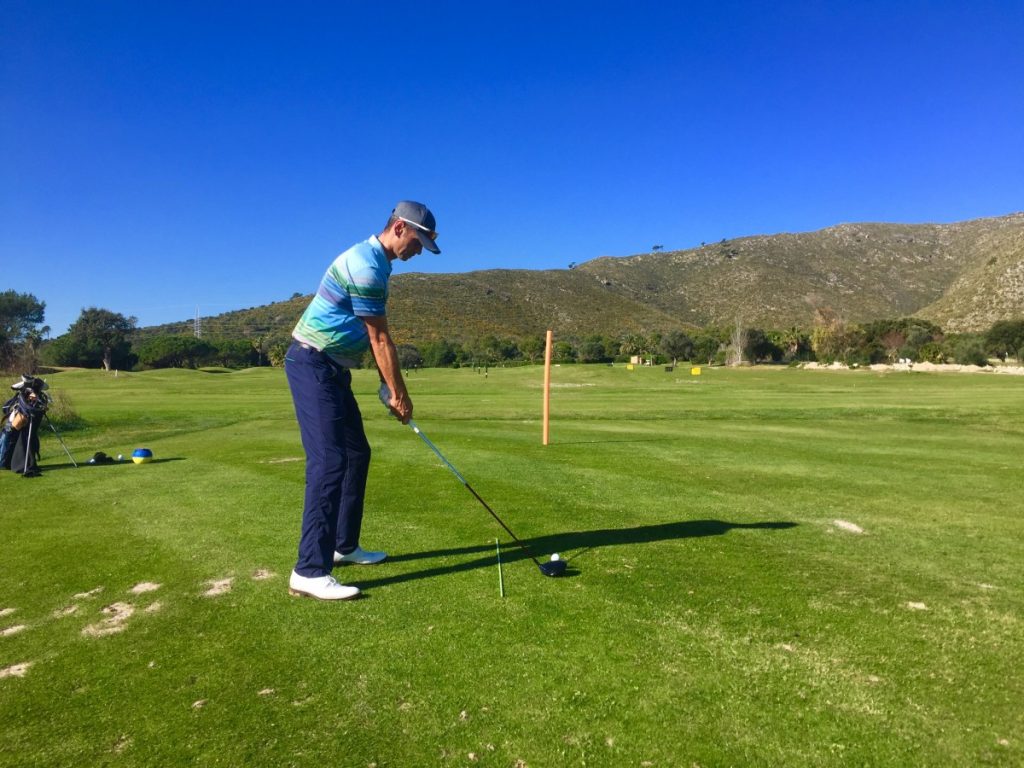
For our performance games and technical drills, we’ve created several corridors. Pitching corridors are roughly ten meters wide. This way for irons and hybrids, the space becomes much tighter – ideal for precision practice. With fairway woods or the Driver, the challenge increases again.
In the middle of the range, we created a hilly undulation that acts as a fairway edge. This allows us to create two realistic fairway situations and gives golfers the chance to work on their tee-shot strategies using properly spaced landing areas. One corridor has a no-go zone on the left, the other on the right – just like on the golf course.
5. Learning to hit from grass

A good shot from short-cut grass builds confidence and shows honestly how clean the strike really is. Practising on grass often involves themes like controlling grip pressure, lateral stability, solid swing timing, managing the height of the swing arc and, most importantly, understanding and controlling the angle of attack.
And yes – golf is also about aiming. Mats make alignment easier, but grass is honest: can the golfer actually aim, or is poor alignment responsible for directional misses, fat shots, thin shots or all kinds of other errors? There is a lot of cause and effect at play… you just don’t always realise it. Video analysis helps us a lot when showing what’s really happening.
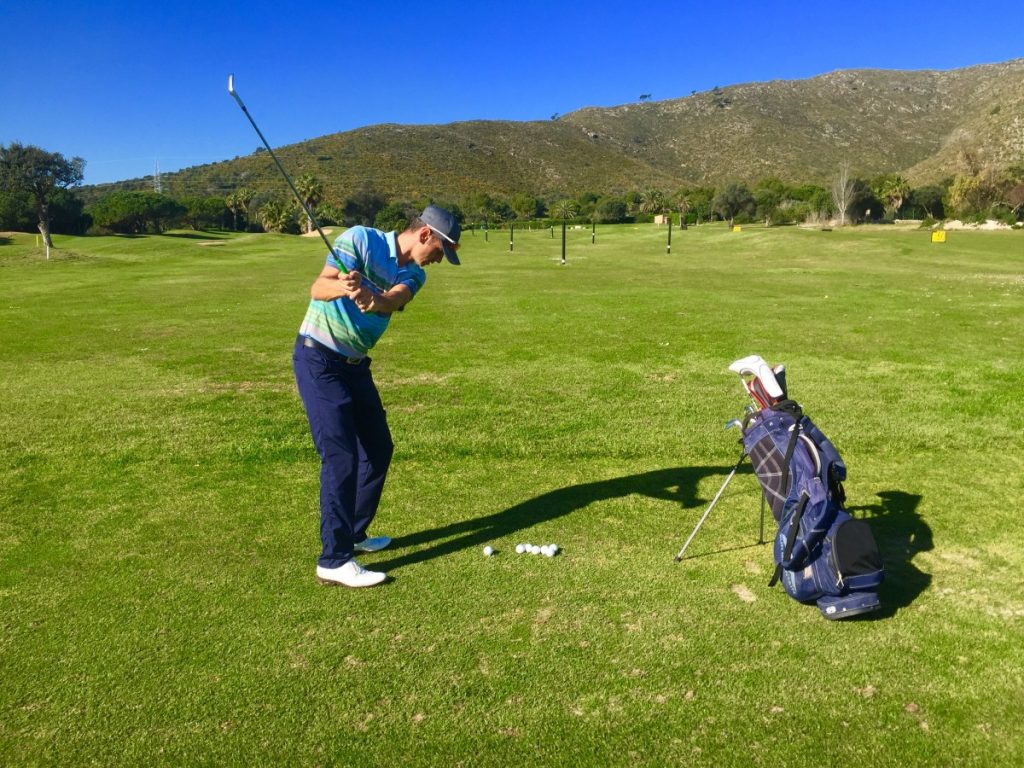
If you struggle with impact conditions, be sure that we work on these every single day, until you feel comfortable and can reproduce solid contact on the golf course. This is one of the big advantages of weekly courses over single lessons – the changes truly stick.

Beginners focus mainly on developing their first real feel for proper ball-turf contact. They learn what a clean strike feels like – and what they need to do to produce it consistently.
Advanced players use the grass tee to refine strike quality, build consistency and adapt to different conditions: hard or soft ground, semirough lies and small undulations. These variations make training more realistic and closely aligned with actual on-course situations. When playing, we identify what causes you trouble. In practice, we recreate those situations, work on the solution and then re-test it on the golf course. That’s how we do it.
6. Fairway Bunker Training
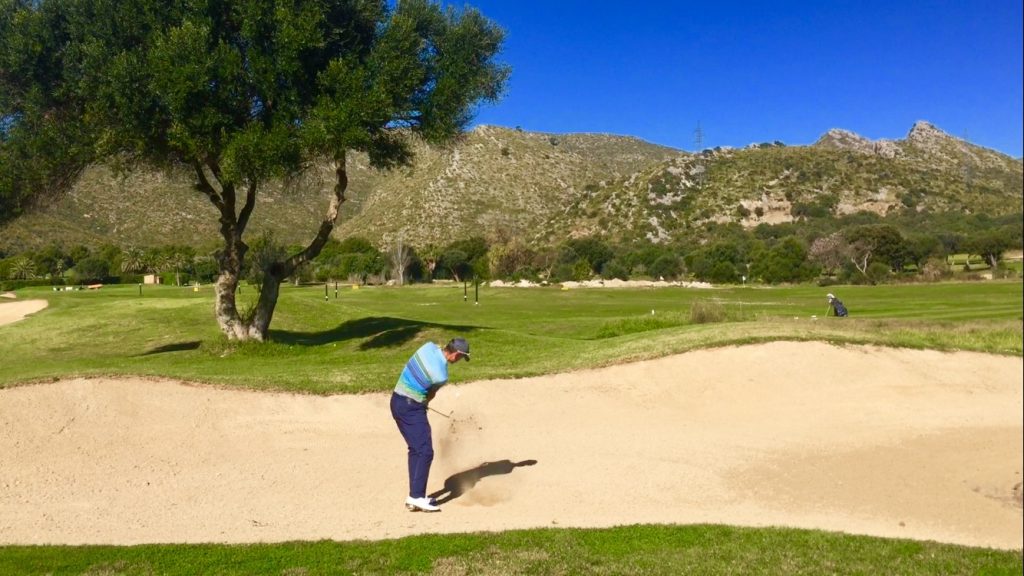
In the fairway bunker, we practise not only classic bunker shots with various clubs. We also use this situation to sharpen iron contact. The bunker demands precise ball-first contact – perfect for improving technique, rhythm and control in a very visible way.
7. Training sidehill lies

Slope training starts with understanding the four basic slope types and applying the right adjustments to make your shots functional. Things get interesting when we combine two slope types at once – for example, ball below the feet combined with a downhill lie. Now two corrections are needed. Through repetition we look for a stable, reliable impact. Once that’s achieved, we begin to see how the ball flight is affected. But the job isn’t finished yet – now we can work on aim and choose the correct landing spot so the shot succeeds not by chance, but by ability.
Sounds like a lot? It is – these situations challenge many golfers. That’s exactly why we’re here. We help you understand what’s happening and give you the tools to handle these lies with confidence. On the course we spot what causes trouble, then step back together, build the needed skills and return to apply them with more control and trust. Again, that’s one of the advantages of a weekly course.
[booking-button]
8. Transferring what you learn onto the Course
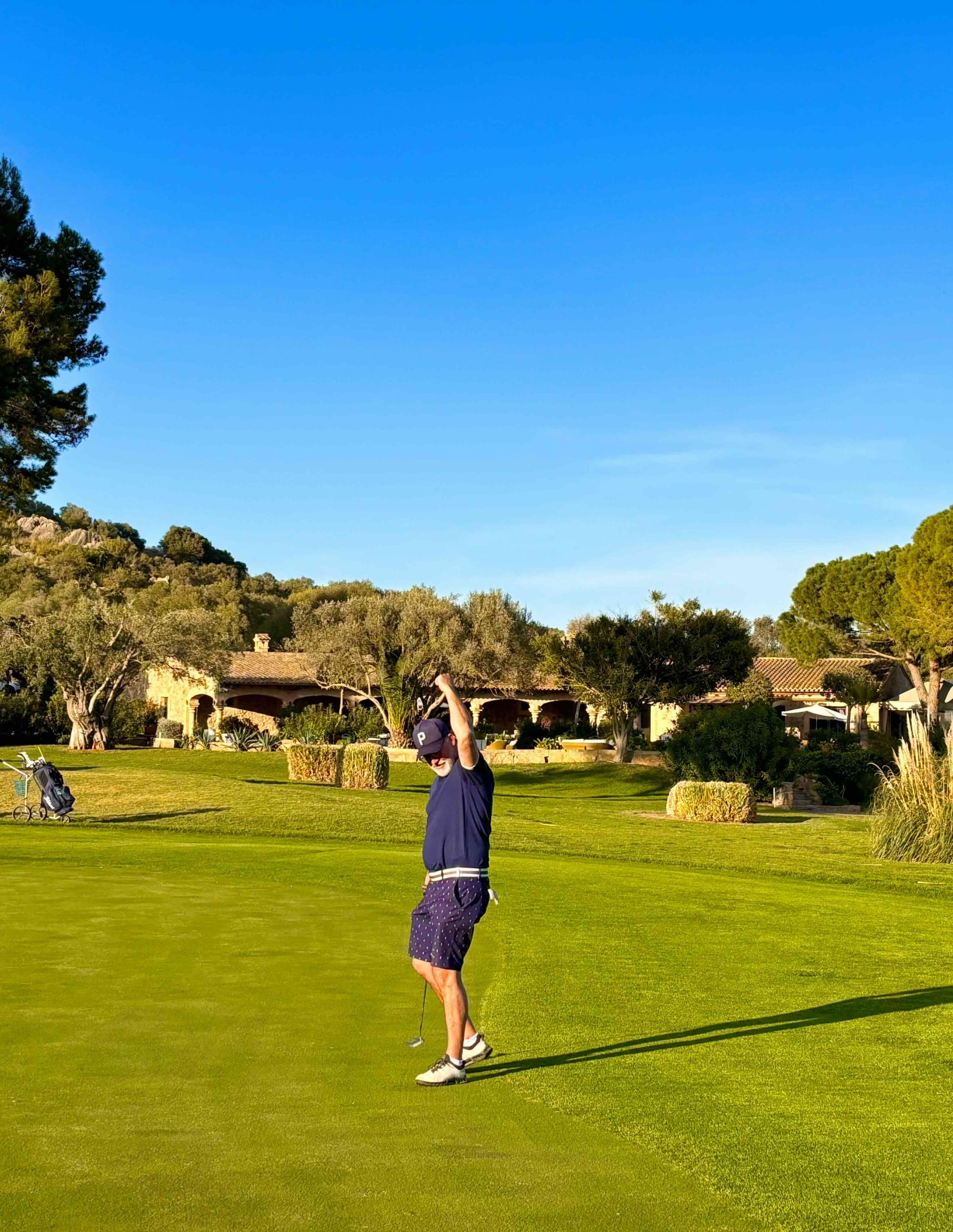
The golf course is the ultimate test — full of endless practice opportunities and real playing situations.
Every hole asks for something different. In our 18-hole review, we show you each hole in detail and explain what we work on there with our golfers day after day.
All of this takes place in a fun, relaxed and welcoming atmosphere. The natural charm of the club and our 28 years of coaching experience come together to create a truly enjoyable and inspiring learning week for you.
Don’t want to just take our word for it? Have a look at the reviews from our guests. We truly focus on creating a great week for you!
Back to transferring what you’ve learned to the Course
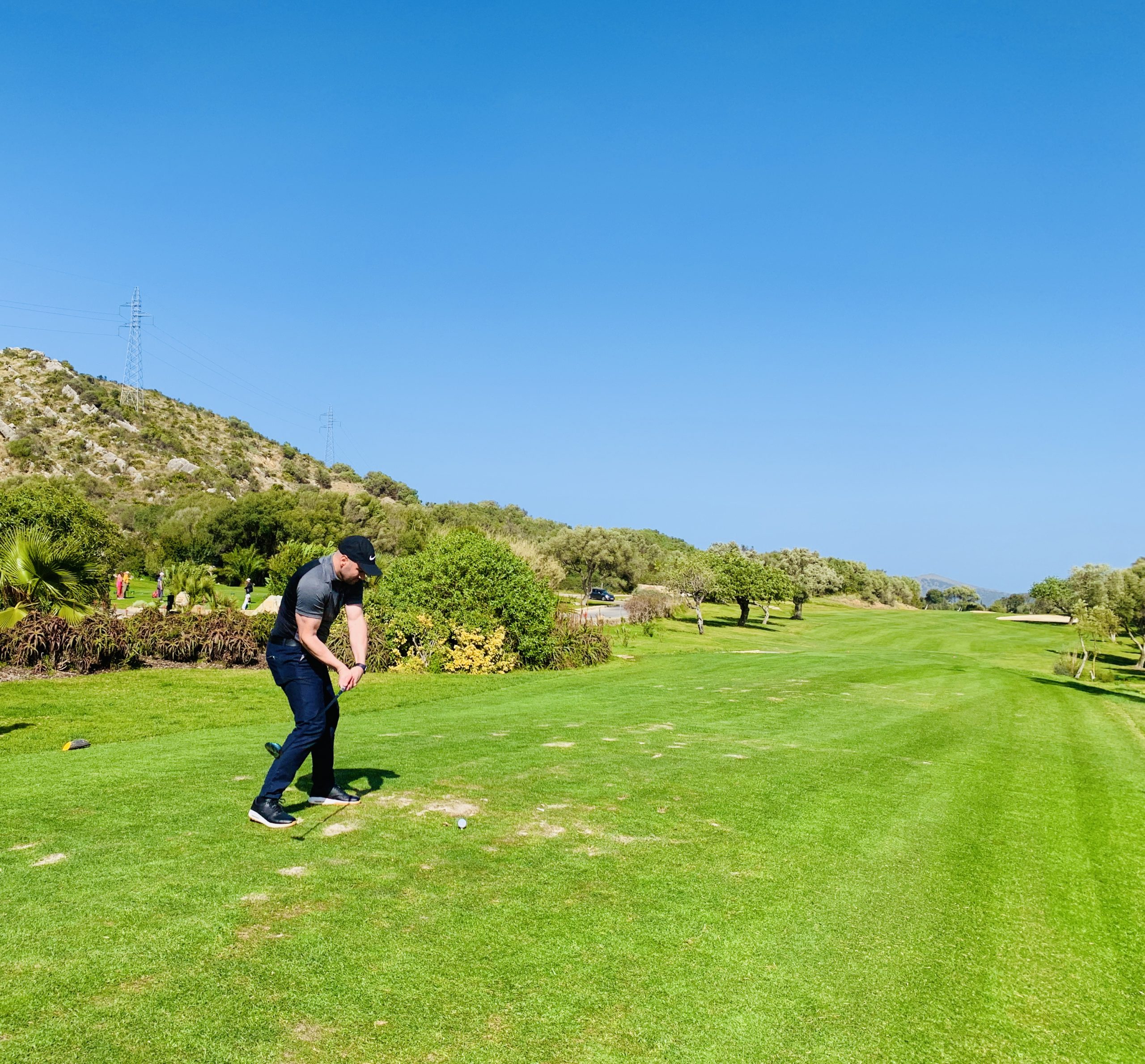
The front nine are great for building confidence off the tee, learning to use your ball flight and developing tee-shot strategies. They’re wide, open and pleasantly flat — ideal for beginners and higher handicappers. Here we can build confidence, establish routines and work on introducing new clubs or shot types in a calm, forgiving environment.
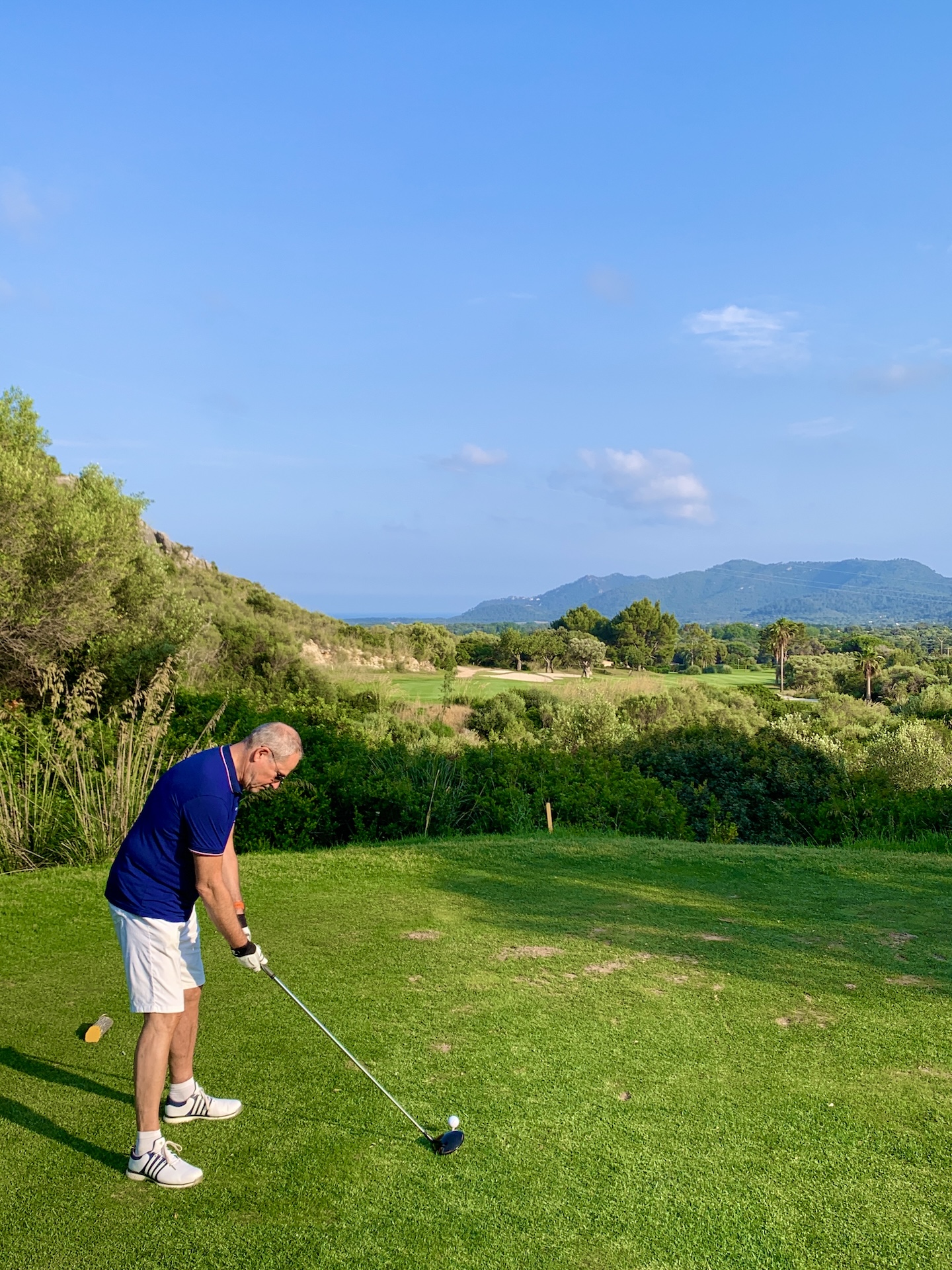
The back nine are a different story: more water, more trees, more elevation changes. Some holes are long and open, others short and tight. There are blind shots, steep lies and those classic moments where the ladies’ tee sits much further forward (#ladiestime). And of course – the famous “Valley of Lost Balls” on hole 18. You’ll understand the name the moment you stand on that tee.
This is also where course strategy becomes essential. We work on simple rules that help you avoid the “stupid shots” – the ones that cost penalty strokes and grey hairs. Developing an instinct that warns you before you step into trouble is crucial. Without it, golfers tend to ignore the danger ahead… and that usually doesn’t end well.
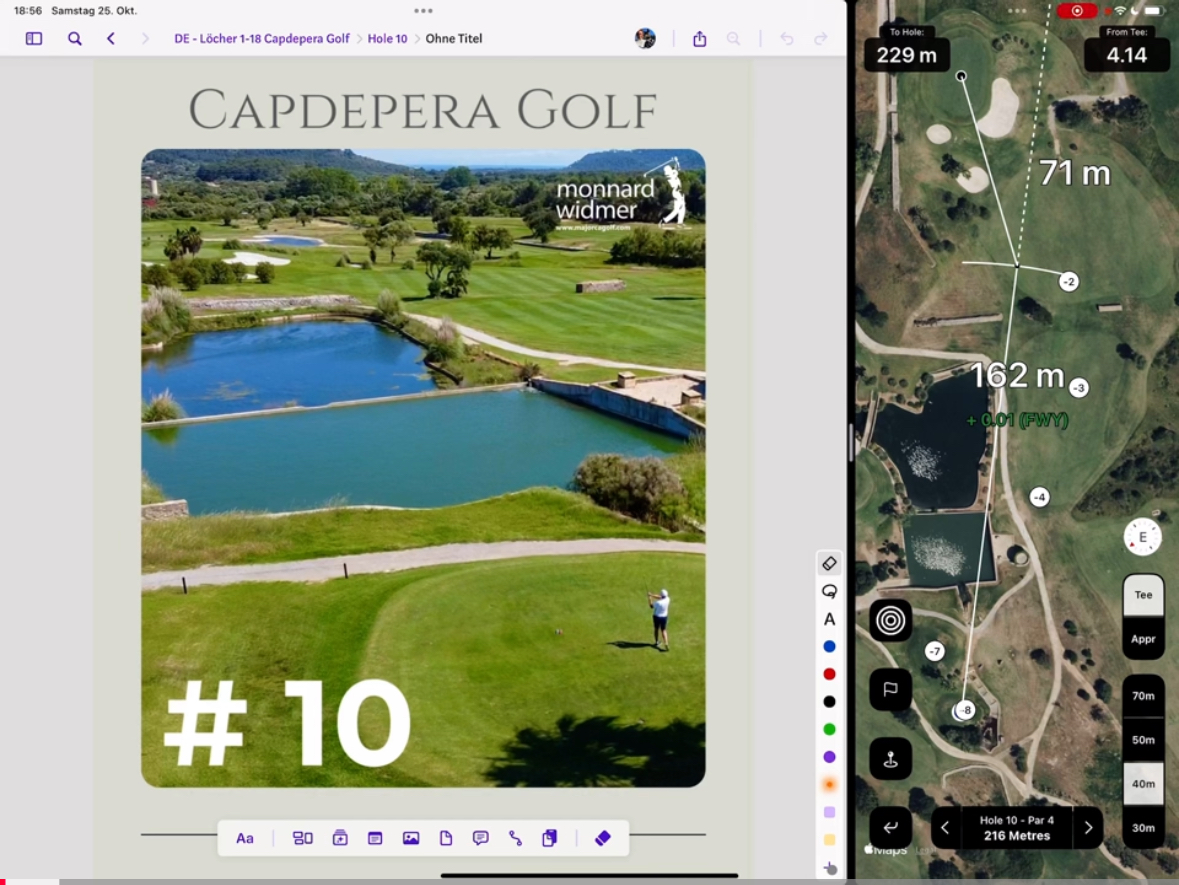
After reading this article, you might enjoy our detailed look at all 18 holes of the course.
We show you what we work on at each hole – strategy, shot choices, common mistakes and the little insights that make a big difference. There’s a lot of useful wisdom waiting for you – first in the 18 videos and secondly when you sign-up for one of our courses.
In short: you’ll find everything you need for effective, meaningful golf training.
[booking-button]
Our most important mission: improving your golf and making sure you have a great week

We follow a simple principle: if you understand what you’re doing, you should be allowed to play. One of the great advantages of our home course is that beginners and Handicap-54 students can go out on the course independently in the early evening, once daily traffic has eased. That’s not possible on many golf courses.

Because our new golfers play on the course several times during the week with us, they know how to behave and how not to disturb other players. This allows us to give them this freedom with confidence. These first independent rounds are incredibly valuable – they build confidence, routine and a true feeling for the game.
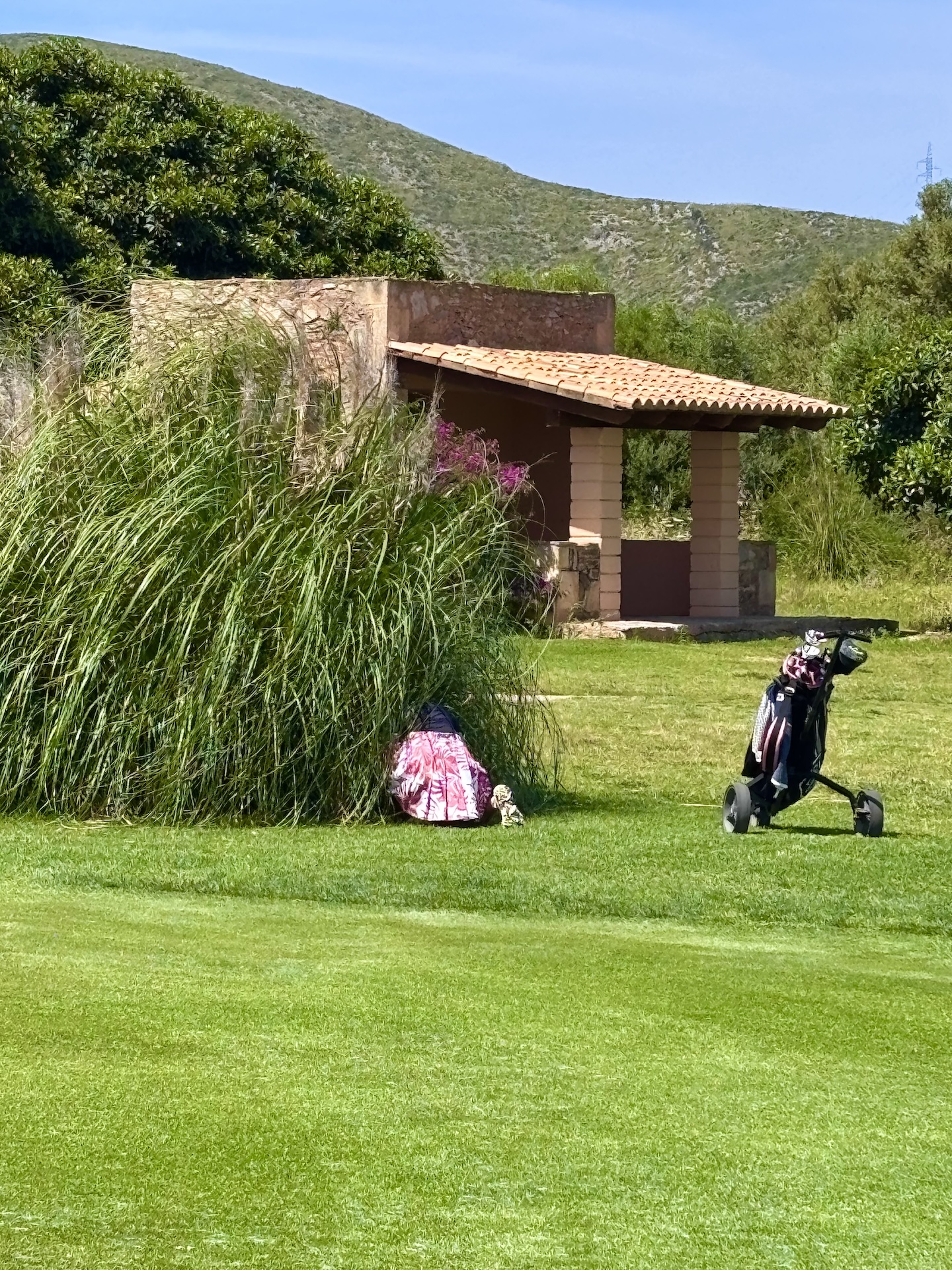
After 15:30, our students may head onto the front nine on their own – in the calm of the evening, without pressure, perfect for focused learning and enjoyment. And afterwards? A cool drink or a relaxed dinner on the clubhouse terrace, in a restaurant with sea view or in the village square. That’s how a golf day becomes unforgettable.
Capdepera Golf – The Course Video for your first impression
This video gives you a complete overview of our home course in under three minutes. You’ll see the landscape, the fairways and the practice areas where we train every day. It gives you a clear picture before you even arrive.
And now, read more about: How we use our Short Game Area

If you’d like to see how we train the short game, you can find our dedicated Short Game Training page here
[booking-button]