

Short game golf training mainly means hitting the ball close to the flag more often. Chipping and pitching sound simple – but how do you practise them in a way that really works later on the course?
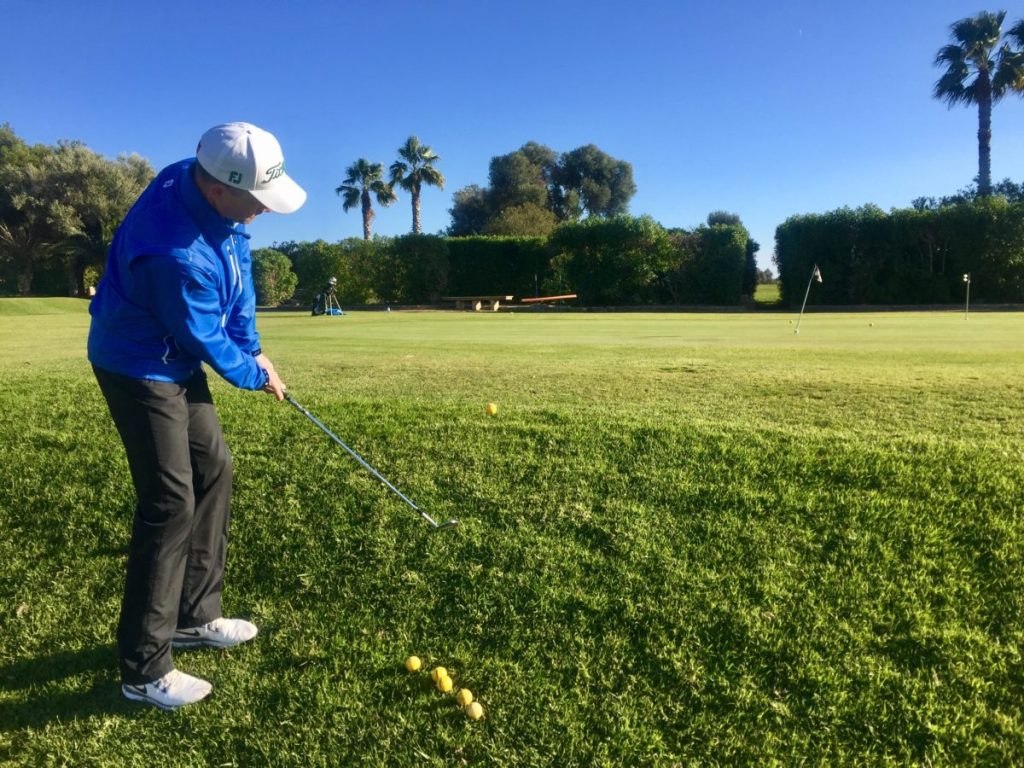
Today we had perfect conditions for chipping and pitching. My student: a passionate golfer with a 17 handicap, full of energy and highly motivated to improve his game.
In previous sessions on the short game we had focused on technical points so that his movement became more consistent. He had worked on that for several hours. Today’s plan was different: show him how to train in a way that is truly effective and can be transferred onto the golf course.
The technical work was done. We now focused on decision-making, clear targets, a precise picture of the shot and a feel for distance and landing spot.
The starting point was stations training in the short game with different situations that you actually face on the course. Chipping and pitching were the main topic.
The job of a coach is to create situations in which a golfer can grow – trust himself, be creative and see how good he is now and how good he can become.
We set up several different challenges and deliberately used them to spark creativity:
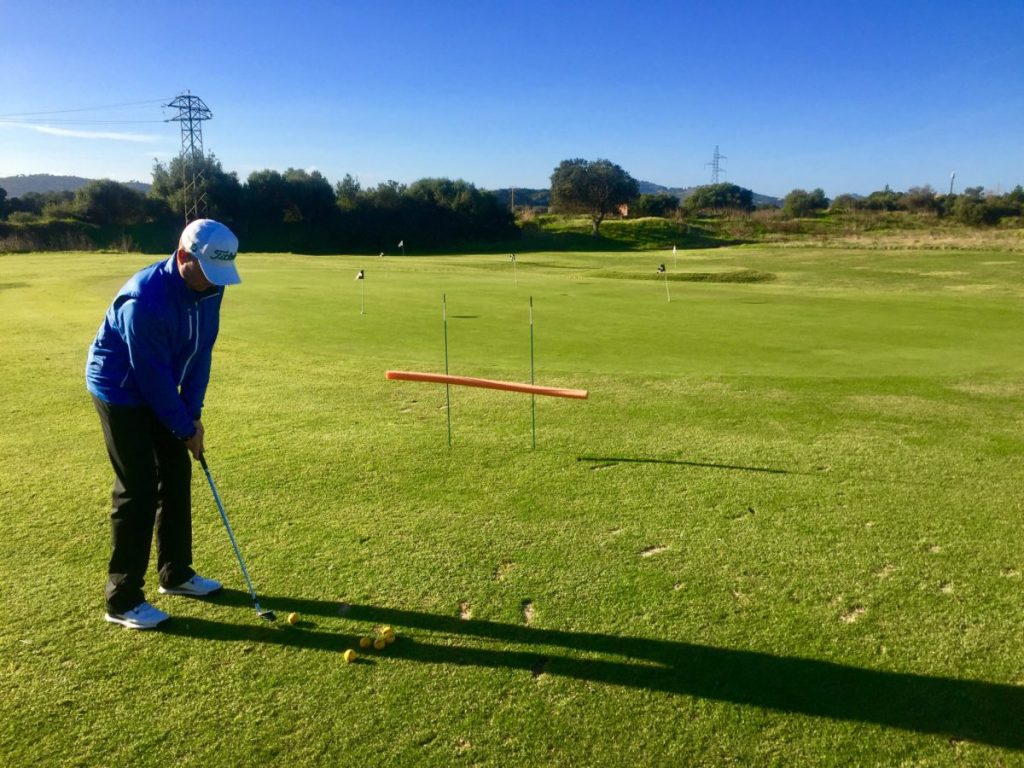
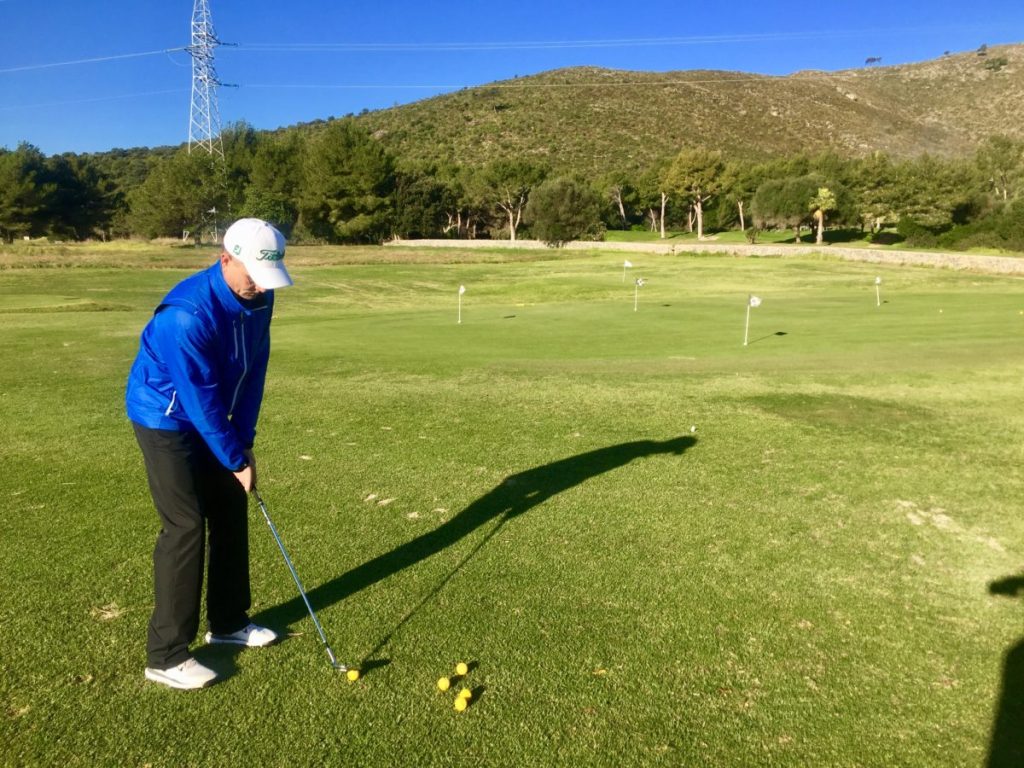
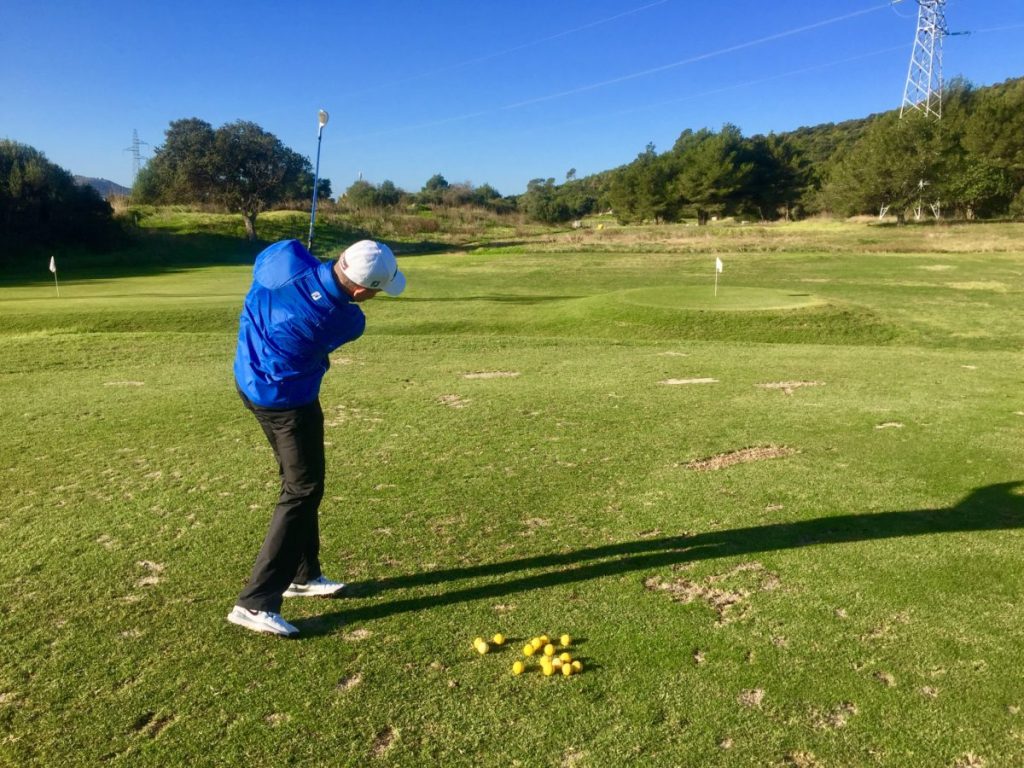
Station 1: Low and high chip, playing the ball under and over the pool noodle. Target: the flag. After each round the noodle was moved slightly.
Station 2: Chip/pitch over a bunker to a short flag. Get the ball safely onto the green and stop it quickly, keeping the bunker risk out of play as much as possible.
Station 3: Pitching from different distances to small target greens.
Station 4: Chipping from a strong uphill or side-hill lie to an elevated green.
Station 5: Pitching from semi-rough on a slope to a medium-sized green.
Station 6: Putting from the fringe – once from 30 cm before the start of the green and once from one metre.
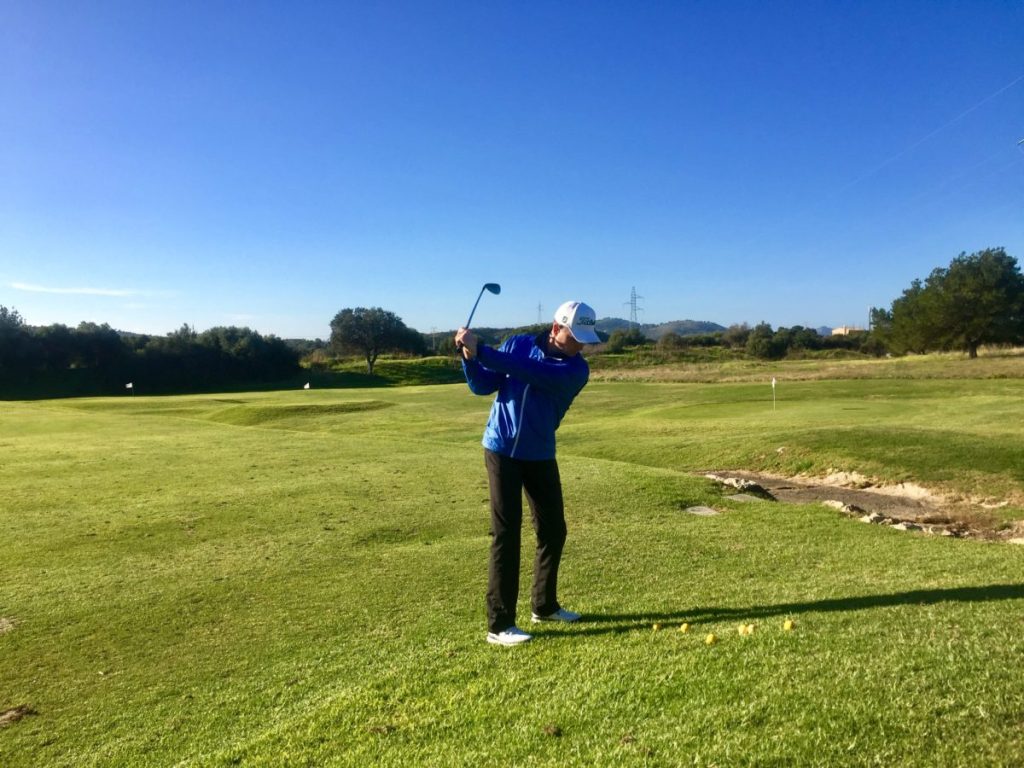

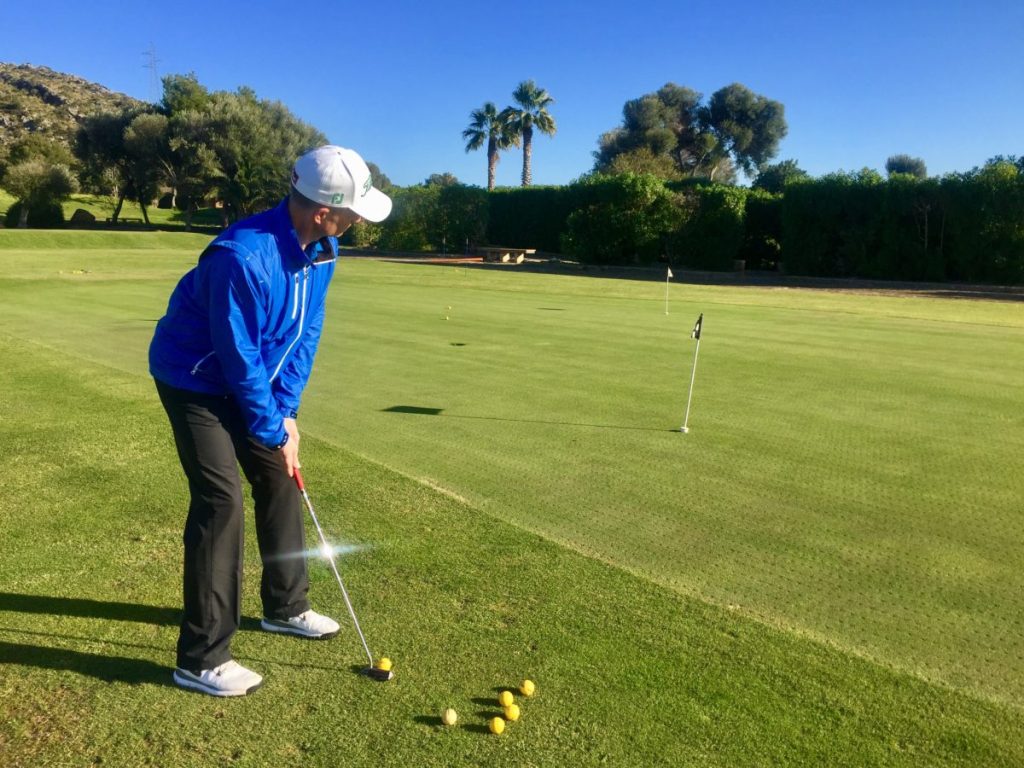
The first rounds were simply about getting to know the different situations. After the first three rounds his feedback was clear: very demanding, high level of concentration, time flies and extremely varied and challenging.
Then we added more tasks:
Station 7: Chipping with a hybrid towards a flag at the back of the green.
Station 8: Chipping to a short flag with a pitching wedge.
Station 9: Short chip with a sand wedge.
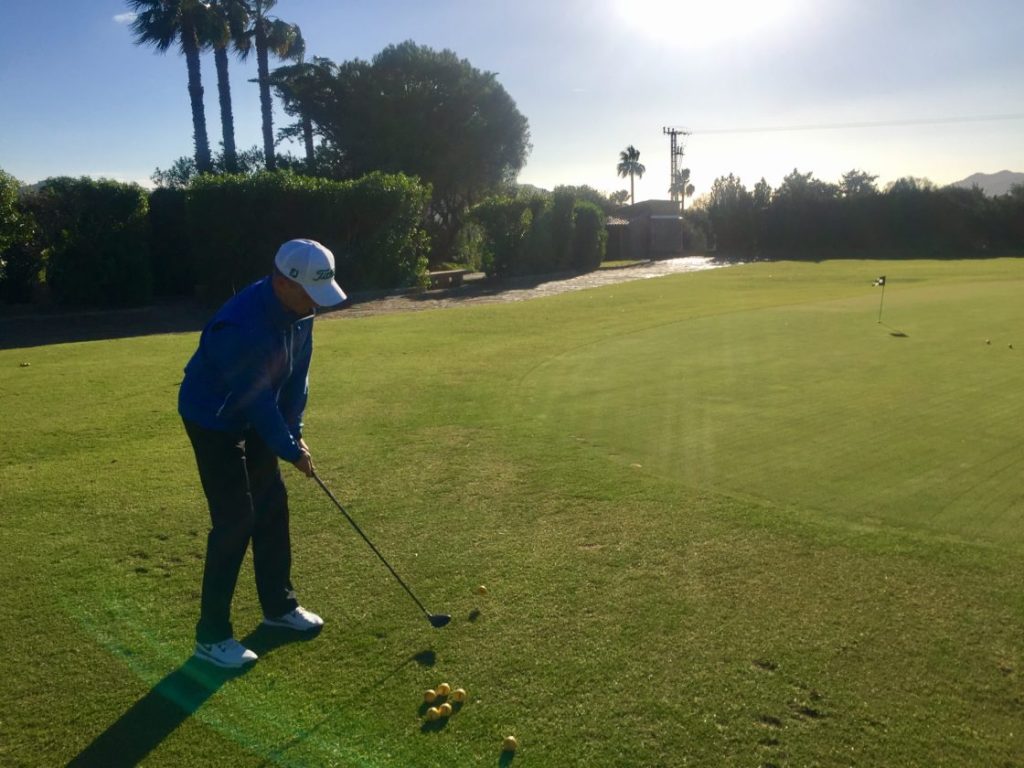
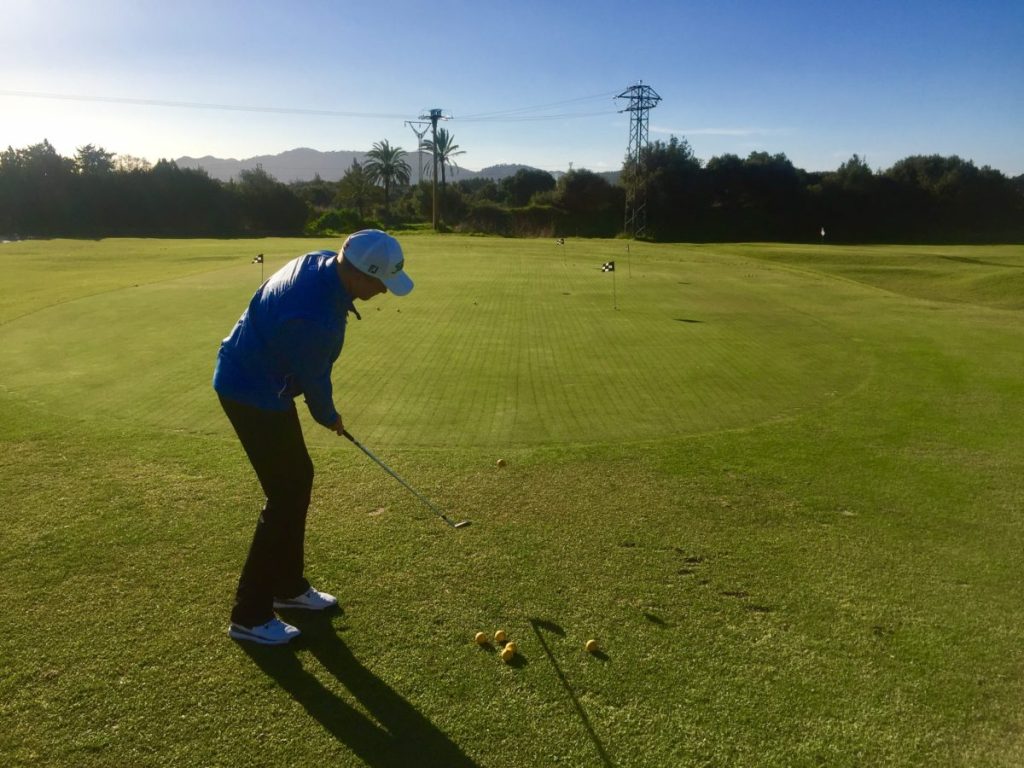
Important: only one ball per station. After every shot he had to move on to the next situation – with about 10 to 15 seconds of walking in between.
On the golf course we never have exactly the same situation twice in a row. So why would we stand in one spot in practice and hit five, ten or even twenty balls from the same place?
After this session we wrote down which additional shots we could add next time, for example:
– 10 m bunker shot
– 60 m fairway bunker shot
– 15 m putt
– 1 m downhill putt
– Chip from a downhill lie on firm ground
– Pitch from the rough to a higher landing area
And of course: whenever a weakness becomes visible during training, we work on it straight away. Example: chip from a downhill lie – we grabbed a pitching wedge and a sand wedge, walked about 100 metres to the 16th green and spent ten minutes practising different slopes around the green. That’s how training should feel.

For me as a coach, this was a perfect opportunity to show how training can be playful and highly effective at the same time. Hitting twenty balls from one spot is useful when you are working on technique – but not when you want to train decision-making, creativity and feel.
In the next stage we give the golfer clear performance targets. If he reaches them, the targets become more demanding in the following session. This way the body has to keep adapting – and that is where real progress comes from.
When was the last time you trained like this? We’d be happy to welcome you to our golf coaching soon.
[booking-button]
Why golfers value our coaching
Real reviews on technique training, decision-making on the course and methods that improve chipping and pitching in the long term.
[booking-button]